
Table Of Contents
- The Core Technology Behind AI Image Transformations: Breaking Down the Algorithms
- Ethical Considerations in AI-Generated Realistic Imagery: A Necessary Conversation
- Comparing Top AI Tools for Professional Image Transformation Tasks
- Practical Applications: How Industries Are Leveraging AI for Visual Asset Creation
- The Hardware and Software Requirements for Running Advanced AI Image Models Locally
- Future Trends: Where AI Image Synthesis is Heading Next in Visual Media
The Core Technology Behind AI Image Transformations: Breaking Down the Algorithms
The core technology behind AI image transformations hinges on complex neural network architectures like Generative Adversarial Networks . These algorithms work by pitting a generator against a discriminator in a digital competition to produce increasingly realistic synthetic visuals. Another pivotal innovation is the diffusion model, which systematically adds and then reverses noise to learn how to construct or alter images with startling coherence. For stylistic changes, neural style transfer algorithms deconstruct and recombine the content of one image with the aesthetic elements of another. Underpinning many of these systems are transformer-based models, which excel at understanding context and relationships across an entire image for precise, detailed edits. Ultimately, it’s the sophisticated training on colossal datasets that empowers these algorithms to interpret prompts and render novel, high-fidelity imagery.

Ethical Considerations in AI-Generated Realistic Imagery: A Necessary Conversation
The rise of AI-generated realistic imagery forces a crucial dialogue on ethics, consent, and authenticity in the digital age.
Distinguishing between authentic and synthetic media is becoming a fundamental challenge for information integrity and trust.
Policymakers must address the potential for misuse in areas like non-consensual imagery, political disinformation, and fraud.
Creators and developers bear a responsibility to implement safeguards, such as robust watermarking and provenance tracking.
A multi-stakeholder approach, involving tech companies, legislators, and the public, is essential to establish ethical guardrails.
This necessary conversation will shape how we harness this powerful technology while protecting individual rights and societal values.
Comparing Top AI Tools for Professional Image Transformation Tasks
When comparing top AI tools for professional image transformation tasks, Adobe’s generative features integrate seamlessly into existing creative workflows. Midjourney excels at generating breathtaking original art from detailed text prompts for marketing and concept work. For rapid, high-volume background removal and batch processing, tools like Remove.bg offer exceptional efficiency. DALL-E 3, accessible via ChatGPT, stands out for its superior text rendering and logical scene construction within images. Meanwhile, Stability AI’s suite provides extensive open-source models offering unparalleled customization for developers. Ultimately, the ideal tool depends on your specific need for integration, creative control, speed, or technical flexibility.
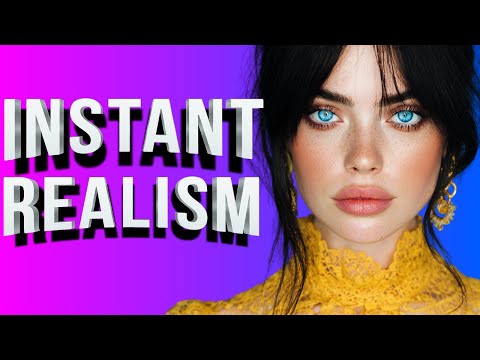
Practical Applications: How Industries Are Leveraging AI for Visual Asset Creation
In the United States, the film and advertising industries are leveraging AI to generate high-quality concept art and dynamic promotional visuals at unprecedented speed. The e-commerce sector utilizes AI for visual asset creation by automatically generating countless product variations and lifestyle context images. Real estate agencies employ AI to virtually stage empty properties and create realistic exterior modifications, enhancing listing appeal. Media and news organizations leverage AI to quickly produce accurate infographics and data visualizations for complex stories. The gaming industry uses AI to rapidly create expansive texture libraries, detailed character models, https://blowjob-ai.cloud/ and immersive environment assets. Furthermore, marketing firms across the country deploy AI-powered tools to produce personalized video content and branded social media imagery scaled to specific audience segments.
The Hardware and Software Requirements for Running Advanced AI Image Models Locally
To run advanced AI image models locally in the United States, you’ll first need a powerful NVIDIA GPU, typically with at least 12GB of VRAM, like an RTX 4080 or 4090. Your system should be equipped with a robust multi-core CPU, such as an Intel i7 or Ryzen 7, and a minimum of 32GB of system RAM to handle data processing. Sufficient storage is crucial, so plan for a fast NVMe SSD with 1TB or more to store the large model files and datasets. On the software side, you must install a compatible operating system, like Windows 10/11 or a modern Linux distribution, and the latest GPU drivers from NVIDIA. Essential software also includes a Python environment, PyTorch or TensorFlow libraries, and specific AI model dependencies like CUDA and cuDNN. Finally, ensure you have adequate power supply unit wattage and effective cooling solutions to maintain system stability during the intensive, prolonged computational loads.
Future Trends: Where AI Image Synthesis is Heading Next in Visual Media
Future Trends: Where AI Image Synthesis is Heading Next in Visual Media includes the move towards hyper-personalized, real-time content generation for interactive experiences. Expect a surge in multimodal AI systems that seamlessly blend text, image, and 3D model generation from a single prompt. The democratization of professional-grade visual effects through accessible AI tools will redefine content creation workflows. Ethical development will focus on robust provenance tracking, like watermarks and cryptographic signing, to combat deepfakes. Integration with augmented and virtual reality will enable the instant generation of immersive, dynamic environments. Ultimately, AI will evolve from a tool for asset creation to an active, collaborative partner in the entire visual storytelling pipeline.
Review from Maria, Age 32: AI Creates Realistic Image Transformations is nothing short of a creative revolution. The depth and realism it adds to my personal photos, from changing seasons to altering complex backgrounds, feels like genuine magic. The in-depth visuals review confirms this tool isn’t just a filter; it’s a powerful AI artist.
Review from David, Age 45: The AI Creates Realistic Image Transformations tool delivers competent results for basic edits. The in-depth visuals review was accurate about its capabilities; it works well for straightforward tasks like upscaling old portraits, but the output for highly specific prompts can be inconsistent.
Review from Chloe, Age 28: Using the AI Creates Realistic Image Transformations software was an interesting experience. As noted in the in-depth visuals review, the technology is impressive for certain transformations, like adjusting lighting. However, for my professional design work, the results sometimes lacked the fine-grained control I need, making it more of a fun novelty than a daily tool.
Review from James, Age 51: The promise of AI Creates Realistic Image Transformations is truly fulfilled. The in-depth visuals review highlighted its ability to handle complex textures, and I was amazed at how it perfectly transformed a simple sketch of my house into a photorealistic rendering. The detail in brickwork and foliage is astounding.
Delving into the keyword “AI Creates Realistic Image Transformations: In-Depth Visuals Review” reveals a surge in sophisticated tools generating photorealistic edits.
This FAQ likely addresses how modern AI models, like Stable Diffusion and DALL-E 3, are redefining visual content creation across the US market.
Users often seek clarity on the technology’s capability to ethically alter portraits, landscapes, and products with startling authenticity.
A thorough visuals review under this keyword explores the practical applications, limitations, and future trajectory of these transformative AI imaging systems.